

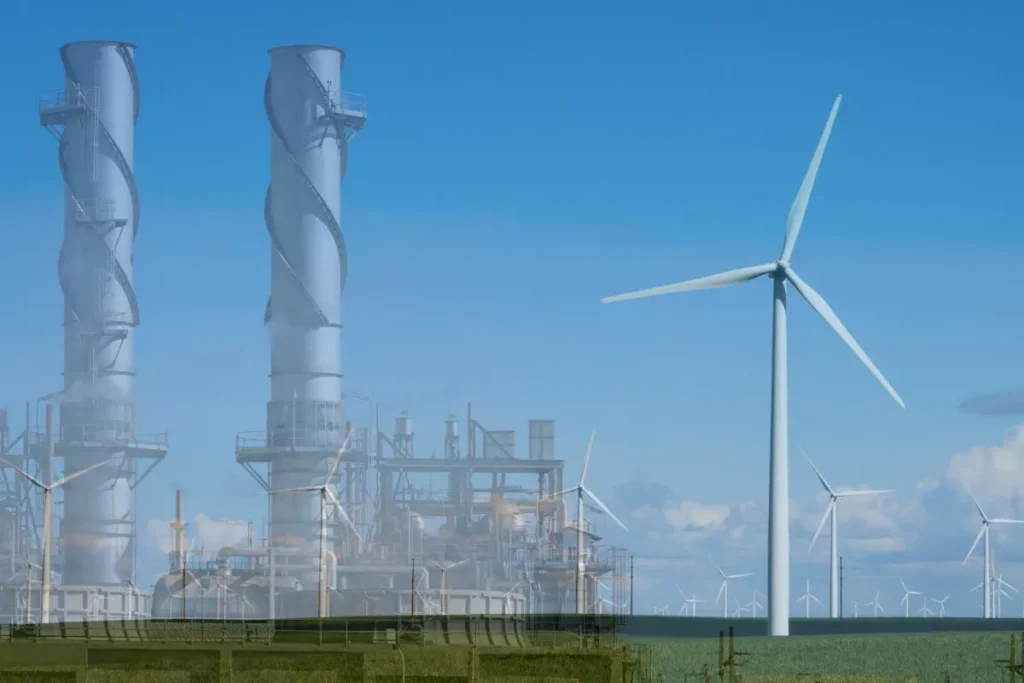
Great River Energy (GRE) is helping move Minnesota toward a cleaner energy future, but its current proposed plan still has room for improvement. GRE is a generation and transmission energy cooperative that supplies electricity to approximately 1.7 million Minnesotans across roughly two-thirds of the state’s geography. As an electric cooperative (co-op), GRE is self-governed by board of directors with members who are elected by the cooperative’s member-owners. Because an electric co-op is not owned by outside investors, its primary mission is to provide reliable and affordable electricity to member co-ops, not to generate profits for shareholders. As a result of this system of presumed democratic governance (or governance by member-owners), the Minnesota Public Utilities Commission (PUC) does not regulate GRE’s rates or long-term planning like it does for Minnesota’s investor-owned utilities—Xcel Energy, Otter Tail Power, and Minnesota Power. Instead, GRE’s board of directors determines the rates charged to member co-ops.
Not sure if you’re a member-owner of a cooperative? Check out the Minnesota Public Utilities Commission’s electric service territory map to see if you get your electricity from an investor-owned utility, a distribution electric co-op like Dakota Electric Association, or a municipal utility like Rochester Public Utilities.
Even though the PUC does not have regulatory authority over electric co-ops, Minnesota state statute dictates that GRE must periodically submit an “Integrated Resource Plan” to the PUC. An Integrated Resource Plan (IRP) generally indicates the projected demand for electricity in an electric utility’s service area for a forecasted period (roughly 15 years) and the utility’s plan to meet that demand. The PUC reviews the IRP and can order GRE to provide more information or make changes to its next IRP. However, the PUC’s order on this IRP is only “advisory” and guides how the PUC will act in other dockets. GRE ultimately does not need approval from the PUC to move forward with its plan.
On April 1, 2026, GRE came out with its latest IRP, which plans for 2026 through 2040. This IRP is a mixed bag: some parts deserve credit, others are frustrating, and a few leave us wanting to know more.
The Good
More Wind Power
GRE’s plan continues to add more wind energy. While wind is a currently sizeable (and growing) chunk of GRE’s energy portfolio, natural gas (and diesel) power plants are still its main source of electricity. But according to the IRP, wind would see a significant increase, adding a total of 1,355 MW of wind energy capacity over the coming five years. Additionally, GRE’s power purchase agreement (PPA) with the coal-powered Rainbow Energy Center would be phased out by 2031.
The Bad
More Natural Gas
New natural gas generation (420 MW) is the biggest concern with this plan — 280 MW of natural gas generation with fuel oil backup is slated by 2031 and another 140 MW by 2032. Driven in large part by hyperscale data centers, GRE expects electricity demand to grow rapidly and is proposing to lean heavily on more natural gas generation in response, even though it has not yet identified where or how these new natural gas power plants will be built. The drop in coal is welcome, but a major buildout of natural gas takes some of the shine off that victory. Doubling down on natural gas runs counter to the 100% Carbon Free Energy Standard, especially when cleaner alternatives appear to have received limited consideration.
Where’s the Solar?
GRE only considered solar generation in 100 MW selectable increments, meaning they only considered very, very large solar projects. For reference, a 100 MW solar farm would cover around 500 acres and can power a small city. With that limited modeling, GRE concluded that large-scale solar is not worth pursuing, despite recognizing its value during summer months and for earning Renewable Energy Credits (RECs). Each REC represents one megawatt-hour of electricity generated from a qualifying renewable resource, such as wind or solar. Organizations can purchase and retire RECs to claim the associated environmental or social benefit.
GRE did not model smaller solar installations that might have penciled out better. Additionally, GRE explained that solar was no longer selected because of the additional energy generation gained from 250 MW of wind.
The obvious question is: Why not both?
It seems GRE could pursue both smaller-scale solar and additional wind generation, potentially reducing the need for new natural gas combustion plants.
Missing Industrial Demand Response
GRE appears to be overlooking one of the cheapest options available: demand response programs for large industrial users. Demand response helps reduce electricity use during periods of high demand, lowering costs for customers and reducing strain on the grid.
It also fits with another strategy GRE already supports: beneficial electrification. Through its beneficial electrification and energy efficiency programs, GRE helps electric co-op member-owners switch from propane, heating oil, and gasoline to electricity in ways that lower both emissions and energy costs. As more homes, businesses, vehicles, and equipment run on electricity, smart demand response programs become even more valuable for managing energy use efficiently.
But so far, GRE’s demand response efforts have mostly targeted homes and small businesses. That leaves significant potential on the table. According to the U.S. Energy Information Administration, commercial and industrial customers make up less than 8% of customers enrolled in demand response programs but can account for nearly 40% of the savings. That suggests GRE could unlock much bigger savings by expanding demand response, which would allow GRE to rely less on fossil fuels. Therefore, GRE should consider incorporating more industrial customers, given that they make up nearly half of GRE’s energy sales—a considerable portion.
The Confusing
Lowballing the Energy Demand Forecast
Significant projected demand growth, driven in large part by hyperscale data centers proposed within GRE member co-ops’ service territories, should be reflected in GRE’s planning assumptions. But GRE selected the lowest of three projected demand scenarios, assuming an additional 400 MW of load. Beyond referencing a “collaborative vetting process” with its member-owner co-ops, GRE did not explain the criteria or considerations for how it arrived at the projection. This lack of clarity and transparency is an issue considering the importance of accurately predicting demand. If GRE does not adequately prepare to meet projected demand, it may be forced to rely on unanticipated sources of energy that come with a hefty price tag and bigger environmental costs.
Energy Storage Mystery
GRE is also planning to build 420 MW of energy storage in 2029. Energy storage is an excellent “capacity resource,” as it would give GRE the ability to rapidly supply power during periods of peak demand. However, their project comes with some question marks of its own. The IRP does not specify whether this energy storage project will be lithium-ion battery storage or some other type, how many projects will make up this storage, or where the storage will be located. The IRP also leaves ambiguity by saying “if superior, more cost-effective solutions emerge, we will adjust accordingly.” Given the scale of the project, it’s worth knowing more about how GRE plans to procure this much storage. If those plans change, GRE could ultimately have to turn to a more expensive or less desirable form of storage or generation.
GRE’s IRP is open for public comment through November 16, 2026, at 4:30 pm.
By Max Oechsner, CURE Legal Intern, Sumer 2026