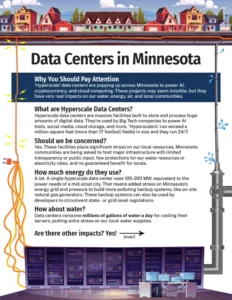
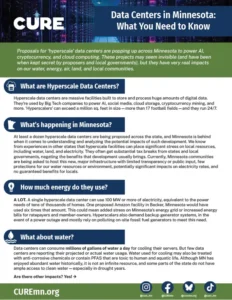
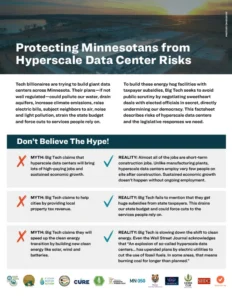
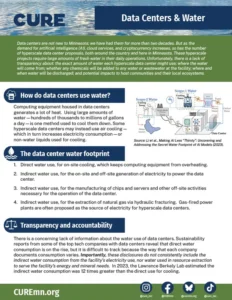
The development of AI, cryptocurrency mining, and hyperscale data centers to support their growth is hurtling forward at breakneck speed. But our understanding of the social and environmental consequences lags far behind. Across the state, Minnesota is targeted for a growing number of new hyperscale projects at various stages of development, sometimes without nearby residents or communities even knowing. CURE is working to ensure that our communities and environment are protected from the potential harms of impulsive hyperscale data center development and demanding transparency at the state and local level when projects are proposed.

Data Center Resources

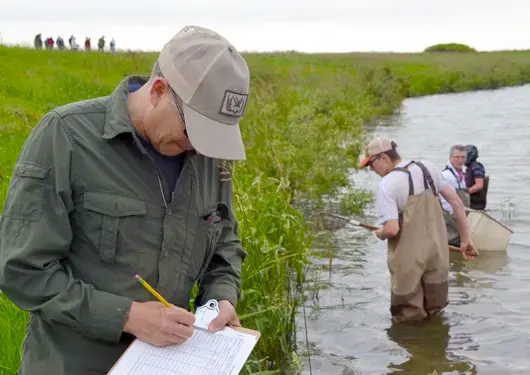
People outdoors checking water quality

Transparency & Oversight

When hyperscale data center developers or end users approach local governments, they often require staff to sign non-disclosure agreements (NDAs), claiming that the secrecy is needed to keep competitors from learning about the project. Sometimes, NDAs are signed years before a project is brought forward for approval. The result? A community that feels decisions about data center development have already been made—without their input. To make matters worse, there is a lack of publicly available information about nearly every aspect of hyperscale data centers—cooling systems, water use, on-site energy generation, to name a few. As these technologies and infrastructures weave themselves deeper into our lives, debates about their impacts on our air, water, landscapes, and communities must become more transparent.

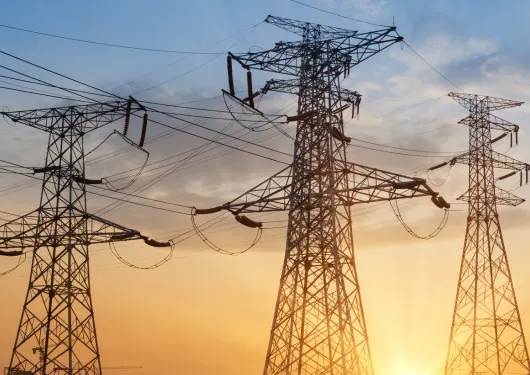
power lines

Energy

Electricity demand is expected to accelerate as we electrify more of our lives. By 2028, 6.7% to 12% of forecasted U.S. electricity consumption is expected to come from hyperscale data centers alone. Where will data centers get all that electricity? Who will pay for it? While Minnesota’s 2025 data center law attempts to provide some certainty, concrete safeguards must be implemented to ensure the cost of new generation, transmission, and distribution is not passed on to other ratepayers, and that data centers aren’t relying on the same dirty fossil fuels that have been polluting our communities for decades.

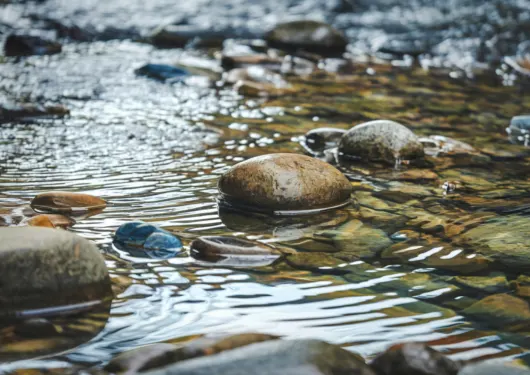
clean water on rocks

Water

Data Centers consume water directly by cooling servers and indirectly by generating electricity to power them. This, along with limited reporting by data center operators, makes it difficult to accurately track total water use. Depending on the technology used, cooling systems may contain additives like glycol or PFAS that need specific treatment before discharge. Minnesota must understand the potential cumulative impacts associated with these kinds of large water users on our communities and natural resources.
stacks of cash

Taxes

Minnesota offers a generous sales tax exemption to data centers for their software and physical equipment that lasts for 35 years from the date of first purchase. Because data center equipment must be replaced every few years, this is an ongoing sales tax exemption.

Originally enacted in 2011, the sales tax exemption was estimated to cost the state about $5,000,000 annually. In the last two years, that cost has ballooned to over $100,000,000—and that’s before any hyperscale data center has even started operating in the state.

Scroll to Top
Kelsey Olson

Kelsey Olson

Director of Environmental Stewardship

Kelsey Olson (she/her) joined CURE in 2025 as its Director of Environmental Stewardship. As a skilled environmental naturalist, Kelsey’s work focuses broadly on environmental education and advocacy with a keen focus on rural land use and how that use impacts our environment and climate. Working Lands, how land is used to support agriculture and forestry, is a key focus of her work. She brings 15 years’ experience in public communication, environmental education, and rural community engagement – strong communication strategies are core in her work. This includes two terms of service with AmeriCorps in the VISTA program in Oregon and Maryland and a nearly 10-year career as a naturalist followed. She recently worked on communications and marketing for rural economic development.

Kelsey lives in New London, MN, with her young children, husband, dog, and two cats. They enjoy spending time together outside and finding small treasures in nature. Visits to Minneapolis often include visits to one of their favorite historical museums, the Minnesota Swedish Institute. Kelsey enjoys experimenting in the kitchen, whether this is canning local produce, making kombucha, or other treats!