

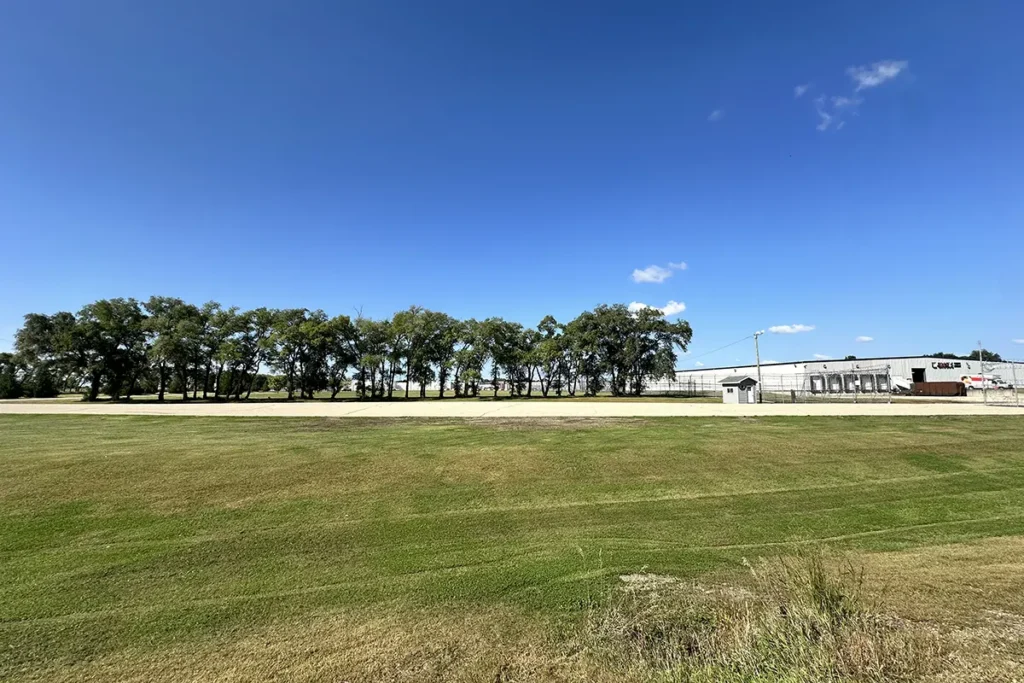
People in Appleton deserve to know the foreseeable impacts of reopening the Prairie Correctional Facility
CURE has filed a federal lawsuit against the U.S. Bureau of Prisons (BOP) for failing to comply with the Freedom of Information Act (FOIA). In January 2026, CURE submitted a request to BOP for information related to a 2014 environmental and economic review of the Prairie Correctional Facility in Appleton, MN. Under FOIA, if a federal agency fails to make a timely final determination on a FOIA request the requesting party can sue to obtain the records.
The Prairie Correctional Facility was built in the early 1990s. Later that decade it was sold to private for-profit prison company CoreCivic, which operated it as Minnesota’s only private state prison until it was shuttered in 2010. In 2014 BOP considered reopening the facility as an immigration detention center, to house up to 2000 criminal inmates, and as a part of that process commissioned an Environmental Assessment (EA) in accordance with the National Environmental Policy Act (NEPA). BOP did not move forward with those plans, and the facility remained closed and mothballed.
In 2025, rumors reemerged that the Prairie Correctional Facility would reopen as part of the Department of Homeland Security’s search for places to hold the people caught up in its expanded immigration crackdown.
In early August 2026, CoreCivic confirmed that it had been contracted by DHS to operate this 1600-bed facility to house immigration detainees. While the current plan differs in many ways from the project BOP envisioned in 2014, CURE contends that the 2014 EA could provide critical information about the environmental and social impacts that the government identified at the time.
“We expect the federal government to comply with the law under FOIA and NEPA, as they have in the past. Producing a handful of identified documents should not take years, and the facility should not be filled with people if the government cannot demonstrate it has complied with all relevant planning and environmental requirements.” Said Hudson Kingston, Legal Director at CURE. “We hope that the federal court will assure a timely production of these documents, before the facility is fully operational and harms are occurring.”
Without this lawsuit, the prison facility could be filled and fully operational before BOP produces the small number of documents that CURE had requested in January of 2026. This lawsuit does not change the timeline of the facility’s opening or operation.
CURE is rurally based, with staff across Minnesota. CURE knows rural people, lands, and ecosystems are vital to helping solve some of the biggest problems Minnesota and the country face. We help to tell the story of a vibrant rural future, lift-up people to lead, and work for policies and laws to make a better future possible for everyone.